Septic Tank Repair Boise ID

Repair decisions improve when the tank is open, the original liquid level is recorded, and the failed part is named.

Mon–Sat, 7:00 AM – 7:00 PM · Urgent backup calls accepted at any hour

Many septic complaints begin with a replaceable component. A clogged outlet filter raises the tank. A failed float triggers an alarm. A broken inlet line backs up the building. A missing baffle sends solids toward the field. Those are different problems with different permits and trades.

Open, observe, and identify the failed link

Record the operating level before pumping. Check the inlet flow, outlet condition, filter, baffles, walls, floor, seams, cover, and riser. On pumped systems, inspect alarm history, floats, controls, pump draw, and discharge within the provider’s electrical scope.

The permitted drawing can reveal a second tank or chamber that would otherwise be overlooked. If a repair recommendation skips records and inspection and jumps directly to field replacement, ask what observation rules out the smaller failures.

Access covers and risers carry safety duties

A cracked or unsecured cover can admit runoff and create a fatal fall hazard. Keep children and animals away, mark the area, and arrange replacement. Never lean into or enter a tank; gases can overcome a person without warning.

Idaho’s current construction standard brings manholes to finished grade and requires a removable cover with a corrosion-resistant handle or strap. Older tanks may differ. A compatible riser can simplify later service, but the attachment and lid must remain watertight and secure.

Concrete septic lid and riser visible at finished lawn grade
Safe access at grade reduces repeated excavation and makes maintenance easier to document.

Baffles and filters protect the absorption area

The inlet slows incoming flow and limits disturbance. The outlet keeps floating material in the tank, and a filter catches additional solids before they reach distribution. Damage at that point can shorten field life without producing an immediate indoor backup.

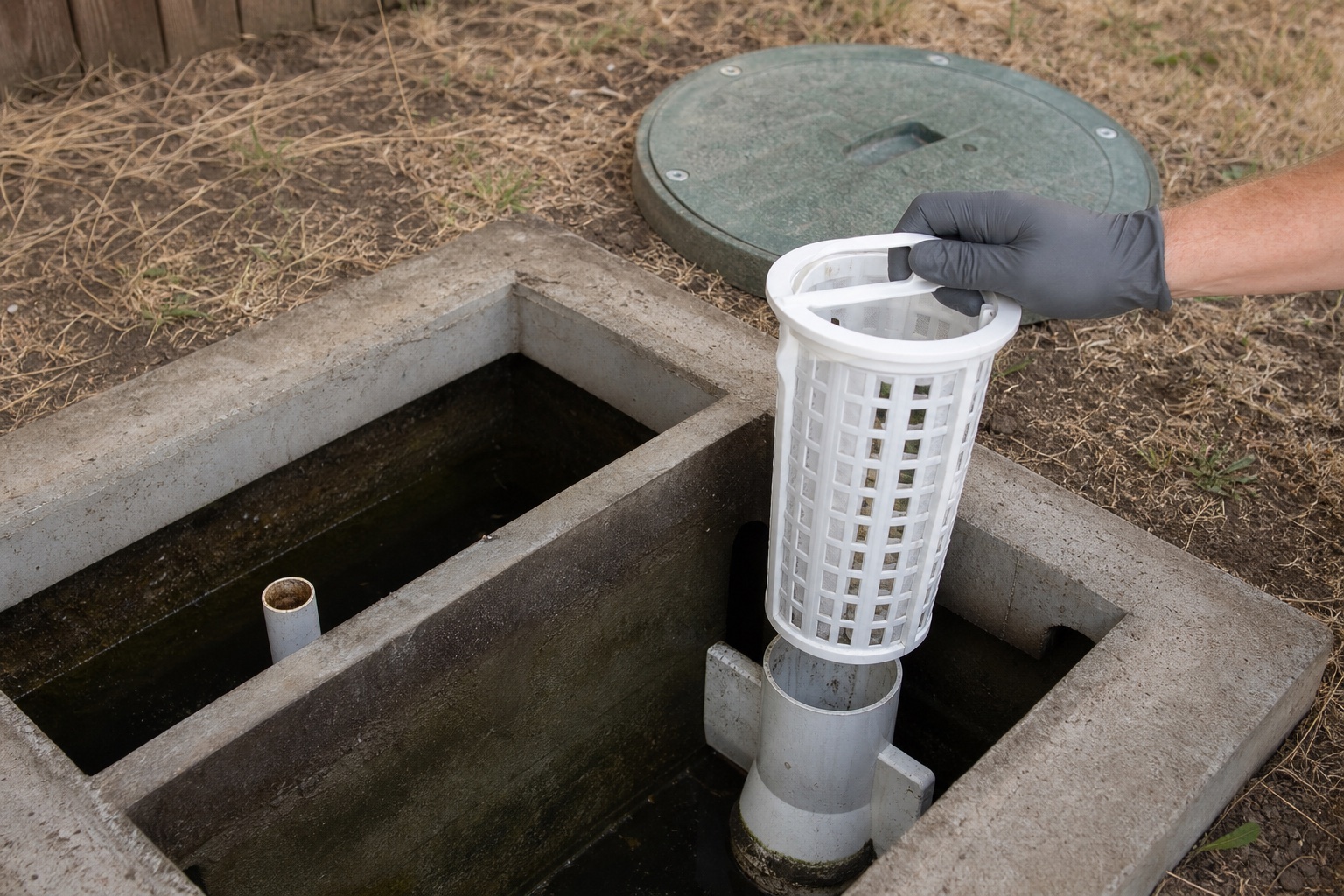
Filter cleaning belongs above the tank so wash water and captured solids return safely to the tank, not the lawn. A broken concrete baffle may need a suitable sanitary tee retrofit. The tank material and permit history determine the repair method.

Know when repair crosses into permitted alteration

Idaho allows certain fixes to clogged or broken solid pipe and electrical or mechanical malfunctions without an installation permit, provided the work does not expand the system. Tank replacement, field work, system expansion, and many structural changes require health-district review.

Call CDH at 208-327-7499 before a repair that changes capacity, location, treatment, or disposal. A contractor should describe the scope precisely enough for the district to answer. “Septic repair” by itself covers too many different activities.

When replacement makes more sense

A tank with severe structural failure, unsafe access that cannot be corrected, or leakage that defeats treatment may need replacement. Repeatedly patching a cover while ignoring failing walls can cost more and leave the hazard in place.

You may not need a tank repair when the problem is one fixture or a city sewer lateral. Confirm the property’s wastewater service first. Call (208) 297-2198 with photos taken from a safe distance, the address, tank material if known, alarm status, and whether sewage is backing up.

What the phone call can and cannot settle

The address, permit drawing, last service record, full-access condition, and symptoms can identify a sensible first visit. They cannot prove soil acceptance, structural condition, groundwater clearance, or agency approval. The independent provider confirms its own availability, credentialed scope, price, and written terms after reviewing the job. Written confirmation should distinguish routine maintenance from corrective work and name the evidence the provider expects to collect during the visit.

If excavation, replacement, design, or a permit becomes necessary, stop at the boundary of the original service request and involve the responsible health district. That keeps a pump-out, inspection, repair, and installation decision from being blended into one unsupported estimate.

Septic Tank Repair questions

Does a cracked septic lid need immediate attention?

Yes. Isolate the area from people, pets, and vehicles. A damaged cover can collapse or admit runoff. Arrange a compatible, secure replacement without entering the tank.

Can a clogged effluent filter cause a backup?

Yes. Restriction at the outlet can raise the tank and slow the whole house. Cleaning the filter may solve that restriction, but the crew should also check layer depth and downstream acceptance.

Do all septic repairs need a CDH permit?

No. Idaho provides limited exceptions for clogged or broken solid piping and electrical or mechanical malfunctions when the repair does not expand the system. Ask CDH about the exact scope.

Should I add a riser while the lid is exposed?

Often it reduces future digging. Compatibility, watertight attachment, grade, traffic protection, and a secure cover matter. Include it in the written scope.

Can a pumper replace my drainfield?

Pumping and installation use different Idaho credentials. Hired drainfield construction requires the appropriate installer registration and health-district permit; a pumper permit alone does not authorize it.

Need the failed septic part identified?

Call with the address, symptoms, alarm status, tank access, and any permit drawing or recent pump receipt.

Call (208) 297-2198 Septic pumping · Boise and nearby communities