
A backup can expose people to sewage and damage the building quickly. Keep everyone out of the affected area and do not open the tank yourself. We will ask what is happening now, then check whether the blockage is in one drain, the building sewer, the tank, a pump chamber, or beyond the outlet.
Stop the water and protect the building
Stop laundry, dishwashing, showers, and unnecessary flushing. Keep children and pets away from sewage. Do not use electrical equipment in a wet area. Call emergency services for an immediate gas, electrical, or life-safety hazard.
Tank pumping does not clean or disinfect a contaminated room. Indoor cleanup is separate work. Take photos only when you can do it without walking through sewage or touching contaminated material.
Tell us whether one drain or the whole house is affected
One slow sink or toilet usually starts with that local branch. Gurgling or backup at several fixtures, especially the lowest drain, can point to the building sewer or septic system. Tell us whether an outdoor wet spot or pump alarm appeared at the same time.
A high tank points downstream. A normal tank with no inlet flow during fixture use points upstream. We check those conditions before pumping when it is safe, then create temporary storage if needed.
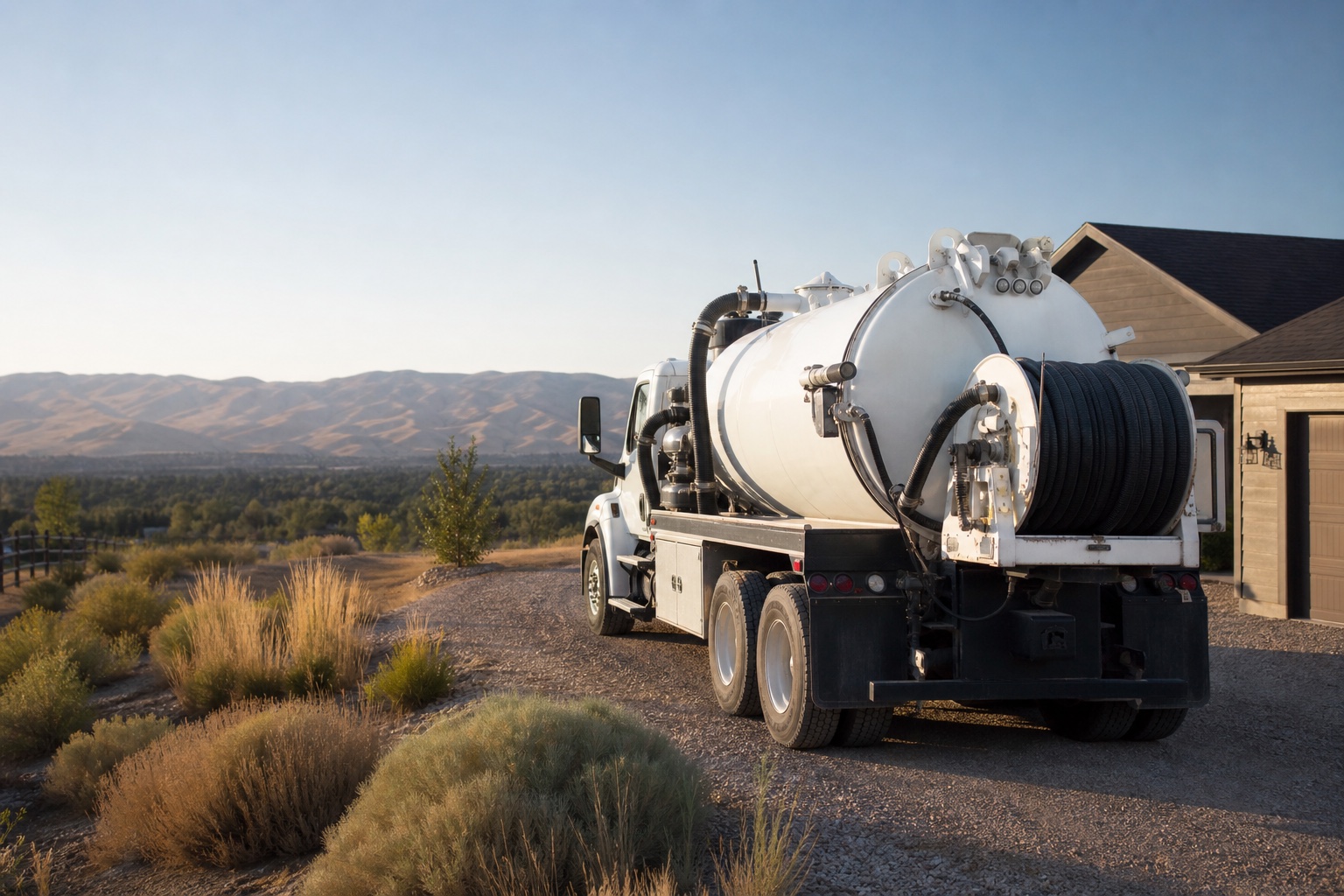
A high-water alarm means use less water
Silencing the buzzer does not lower the chamber. Reduce flow and note the panel lights, breaker status, power outage, laundry use, storm, or freezing conditions that came before the alarm.
A tripped breaker, failed float, damaged cable, blocked discharge, bad check valve, or failed pump can produce similar symptoms. Do not reach into the chamber or keep resetting the breaker.
Flooded ground can make pumping unsafe
EPA warns against opening and pumping a tank while the surrounding soil is flooded. Water and silt can enter, and an empty tank may shift or float. Irrigation, snowmelt, river-adjacent ground, or a broken water line can saturate a Boise-area site.
Tell us about standing water before dispatch. Keep trucks and excavation equipment off wet field soil. The work may need a safer access plan or a delay until the tank can be handled without damage.
A pump-out buys time; it may not be the repair
Removing waste can relieve the building and tank. It does not guarantee that a line, pump, or drainfield will handle the next day’s flow. We document what we observe and explain the next service if the cause remains.
Call (208) 297-2198 with the address, wastewater location, fixtures affected, alarm and power status, tank access, surface water, and whether the building can stop using water. We do not publish a fixed arrival-time promise.