Septic Pump & Lift Station Service Boise ID

A pump system stores wastewater between doses and moves it under control. Alarm, float, pump, and discharge faults each leave a different trail.

Mon–Sat, 7:00 AM – 7:00 PM · Urgent backup calls accepted at any hour

Gravity is dependable when the house, tank, and field elevations allow it. Foothill terrain, distant fields, pressure distribution, or a low building outlet can add a pump chamber. That equipment needs electrical power and introduces parts that ordinary gravity-system maintenance does not cover.

Treat the alarm as a request to stop adding water

Silence the audible signal if the panel allows it, note the warning lights, and reduce household use. Do not switch the pump repeatedly or reach into the chamber. High liquid can result from a failed pump, control fault, stuck float, blocked discharge, loss of power, or a field that will not accept the dose.

Tell the technician whether the alarm followed laundry, a power outage, freezing weather, irrigation, or a storm. Check the main electrical panel from a safe dry location, but avoid repeated breaker resets.

Floats control the sequence

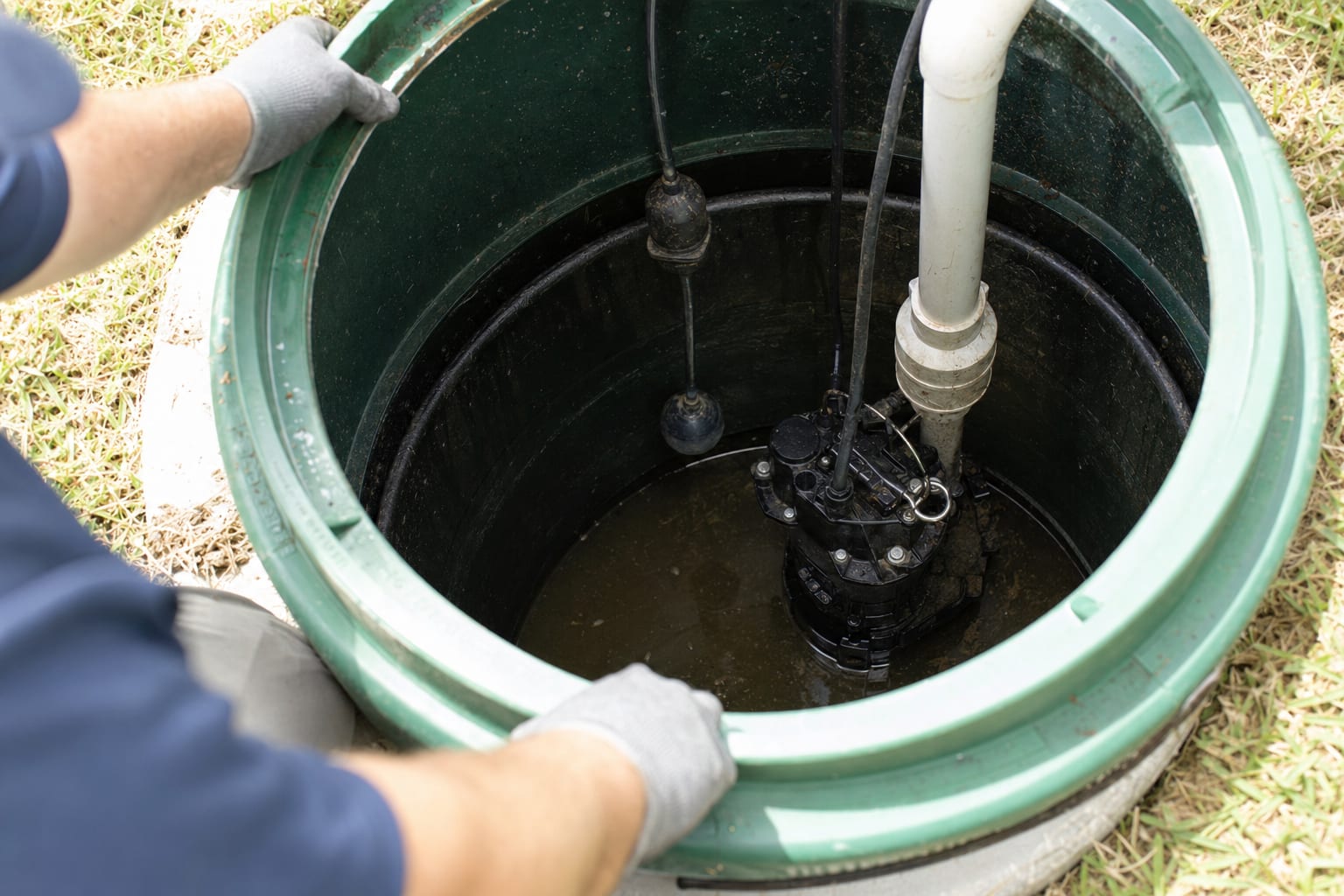
Typical chambers use levels for pump-on, pump-off, and high-water alarm. Grease, tangled cables, shifted mounting, or a failed switch can break that order. A pump may run continuously, fail to start, or short-cycle even when the motor itself remains usable.

Testing should document the actual activation levels and whether the alarm circuit is independent. Replacing a float without correcting cable interference or buildup can recreate the fault.

Open wastewater pump chamber with submersible pump, guide piping, and float switches
The alarm float should warn before the chamber reaches an overflow, leaving time to reduce household flow.

Pump condition includes the discharge path

Current draw, run sound, delivered flow, check-valve behavior, and pressure help separate motor failure from a blocked or leaking line. A working pump cannot clear a frozen, crushed, or obstructed discharge. A leaking check valve sends water back and multiplies cycles.

Pressure-distribution fields depend on even delivery. The permit and maintenance manual may require specific dosing, flushing, or monitoring. Keep pump model, panel diagram, and service records with the septic file.

Cold-weather problems usually involve exposed weak points

Boise’s normal winter includes freezing nights and about 17.60 inches of annual snowfall. Buried tanks and regular warm flow have protection, while shallow piping, uninsulated lids, intermittent-use systems, and roof vents are more exposed.

Do not drive over the field to clear snow. Preserve vegetative cover and identify access before a storm. A vacant mountain property deserves a system-specific winter plan rather than a blanket instruction to drain or shut down equipment.

Electrical and septic scopes must meet at the panel

A septic provider can diagnose hydraulic and mechanical behavior within its scope; line-voltage repairs may require a qualified electrical contractor. The health district may need notice when replacement changes the permitted component or performance.

Call (208) 297-2198 with the address, panel lights, alarm time, breaker status, recent water use, pump model if visible on records, and whether the chamber has surfaced. Limit flow until availability is confirmed.

What the phone call can and cannot settle

The address, permit drawing, last service record, full-access condition, and symptoms can identify a sensible first visit. They cannot prove soil acceptance, structural condition, groundwater clearance, or agency approval. The independent provider confirms its own availability, credentialed scope, price, and written terms after reviewing the job. Written confirmation should distinguish routine maintenance from corrective work and name the evidence the provider expects to collect during the visit.

If excavation, replacement, design, or a permit becomes necessary, stop at the boundary of the original service request and involve the responsible health district. That keeps a pump-out, inspection, repair, and installation decision from being blended into one unsupported estimate.

Septic Pump & Lift Station Service questions

What should I do when the septic alarm sounds?

Reduce water use, note panel lights and recent events, silence only the audible signal, and call. Do not reach into the chamber or keep resetting a breaker.

Does an alarm always mean the pump failed?

No. Floats, power, controls, check valves, discharge lines, and downstream acceptance can all produce high water. Diagnosis should test the sequence and flow.

Can a septic pump freeze in Boise?

Buried components with regular flow have insulation from soil and wastewater. Shallow lines, exposed covers, intermittent use, blocked vents, and unusual cold create greater risk. Inspect the actual installation.

How long should an effluent pump last?

No reliable life can be promised without the model, duty, cycle count, installation, solids exposure, and electrical history. Track run behavior and replace based on condition and failure evidence.

Does replacing a pump require a septic permit?

A like-for-like mechanical repair may fall within Idaho’s permit exception, but changes to design or capacity may not. Ask the health district about the exact replacement scope.

High-water alarm near Boise?

Limit water, note the panel indicators, and call with the system record, pump model, power status, and recent events.

Call (208) 297-2198 Septic pumping · Boise and nearby communities