Grease trap

Grease Trap Cleaning Boise ID

We remove floating grease, liquid, and bottom solids from each accessible compartment and leave a service record for the kitchen.

Mon–Sat, 7:00 AM – 7:00 PM · Urgent backup calls accepted at any hour

A commercial grease interceptor is not a household septic tank. It has a different waste stream, disposal path, access pattern, and service interval. Tell us the kitchen type, device size, compartments, last service, and sewer provider before dispatch.

We identify the device before sending a truck

A small indoor hydromechanical unit and a buried gravity interceptor need different equipment. Give us the rated capacity, cover location, compartment count, parking limits, access hours, and whether the kitchen is operating during service.

Idaho’s domestic-septage definition excludes commercial and industrial wastewater, including grease trap waste. The contractor needs the vehicle, receiving site, and authority that apply to this load.

Every accessible compartment gets cleaned

We remove the floating cap, liquid, and settled bottom material. Then we check accessible inlet and outlet fittings, tees, walls, and covers. Skimming the surface or pumping only the first compartment leaves waste behind.

The ticket should record the service date, volume, compartments opened, condition notes, and disposal information required for the route. Photograph defects before the lids go back on.
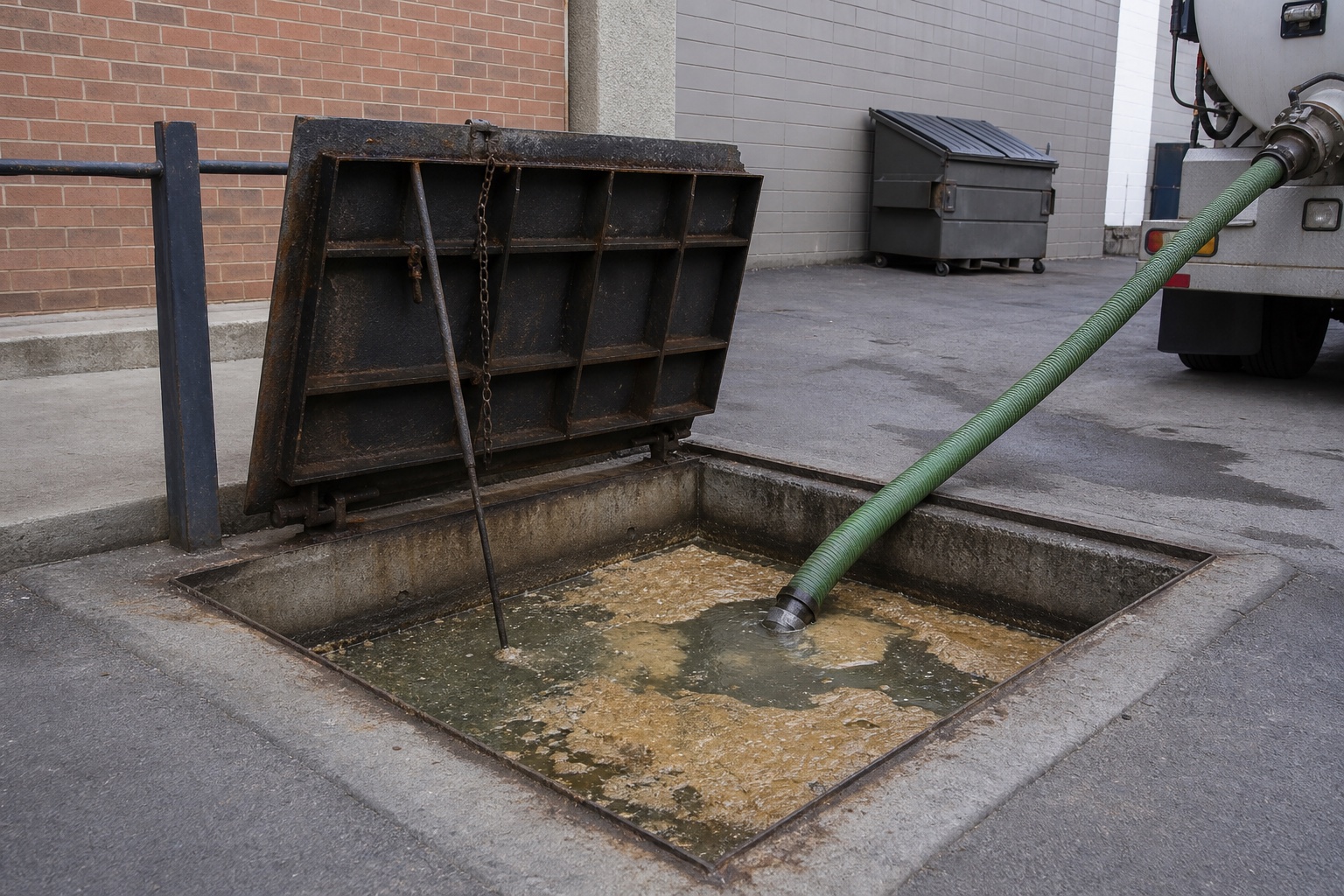
U.S. Air Force technician cleaning a dining-facility grease trap with a vacuum pipe
A full service removes the floating cap and settled solids, not just the liquid between them.

The kitchen sets the interval

Menu, seating, operating hours, cleaning habits, temperature, and interceptor size change how fast grease accumulates. Prior tickets and measured layers show the actual pattern better than one interval for every restaurant.

Keep sink strainers in place, scrape cookware, store fryer oil separately, and train staff to report slow floor sinks. Hot water and chemicals can move grease into the sewer without removing it from the wastewater system.

Pumping may not clear the kitchen line

An overfull interceptor can restrict the outlet, but hardened grease may remain in the inlet or building sewer after the vessel is empty. We check flow before closing the job and quote line cleaning separately when needed.

Indoor overflow cleanup is a different sanitation job. Stop kitchen discharge, isolate the affected area, and follow food-safety requirements before reopening.

Tell us which sewer system receives the flow

A Boise mailing address may use a neighboring sewer district with its own fats, oils, and grease rules. We do not apply household septic instructions to every commercial interceptor.

Call (208) 297-2198 with the address, kitchen type, device size, compartments, access hours, last ticket, backup or odor, and sewer provider. The dispatcher confirms whether the routed contractor can accept the waste.

What we can settle on the first call

Give us the address, permit drawing, last service ticket, lid location, truck access, and symptoms. We can use that information to choose the right first visit and quote the known work. A phone call cannot show us the inside of the tank, the soil below the field, the seasonal groundwater level, or a hidden broken line. The independent contractor confirms availability, credentials, price, and written terms for the actual job.

If the visit turns into excavation, tank replacement, drainfield work, design, or a permit, we separate that work from the original pump-out or inspection. The responsible health district must be involved where Idaho rules require it.

Before the appointment, keep cars, trailers, snow, and stored materials away from the tank and field. Do not open the lid yourself. Mark sprinklers, pet fences, and other buried lines that cross the hose path. If the drawing shows more than one tank or compartment, point that out when you call so the quote and truck setup cover the complete system.

Save the complete detailed service ticket after the visit. It gives the next contractor a starting point for tank size, removed volume, layer depth, access, and any part that needs another look.

Grease Trap Cleaning questions

Is grease waste the same as household septage?

No. Idaho excludes commercial and industrial wastewater, including grease trap waste, from its domestic-septage definition.

How often should a restaurant pump?

Use measured buildup, device capacity, menu, flow, prior tickets, and the local sewer rule. One interval does not fit every kitchen.

Should every compartment be pumped?

Yes, when accessible. Grease and bottom solids can collect in each compartment.

Will pumping clear a blocked kitchen line?

Not always. Hardened grease can remain in the inlet or outlet line after the interceptor is empty.

What details help with a quote?

Address, sewer provider, device type and capacity, compartments, access, hose distance, hours, last ticket, and current symptoms.

Need grease interceptor service in Boise?

Call with the kitchen address, device size, compartments, access window, sewer provider, and last ticket.

Call (208) 297-2198 Septic pumping · Boise and nearby communities