
A septic tank stores scum at the top and sludge at the bottom while liquid leaves through the outlet. Cleaning restores storage before solids reach the drainfield. A quick liquid draw through a small port is not the same service.
We measure before mixing the tank
Idaho guidance calls for scum and sludge measurements after the lid is open. Those numbers show whether the timing made sense and help set the next service interval for that tank and household.
DEQ says to pump before sludge takes more than 40 percent of usable volume or scum reaches a baffle. It describes three to five years as common guidance, not a deadline. Tank size, occupants, seasonal use, and a garbage disposal all change the interval.
A complete cleanout removes both solid layers
We lower the liquid, break up the scum mat, and mix it into pumpable material. Bottom solids may need agitation. We keep mixed waste away from the outlet while the tank is being cleaned.
Idaho guidance allows a few inches of residue to remain as seed and discourages disinfecting the tank. The goal is to remove accumulated waste and inspect the tank, not make concrete look new.
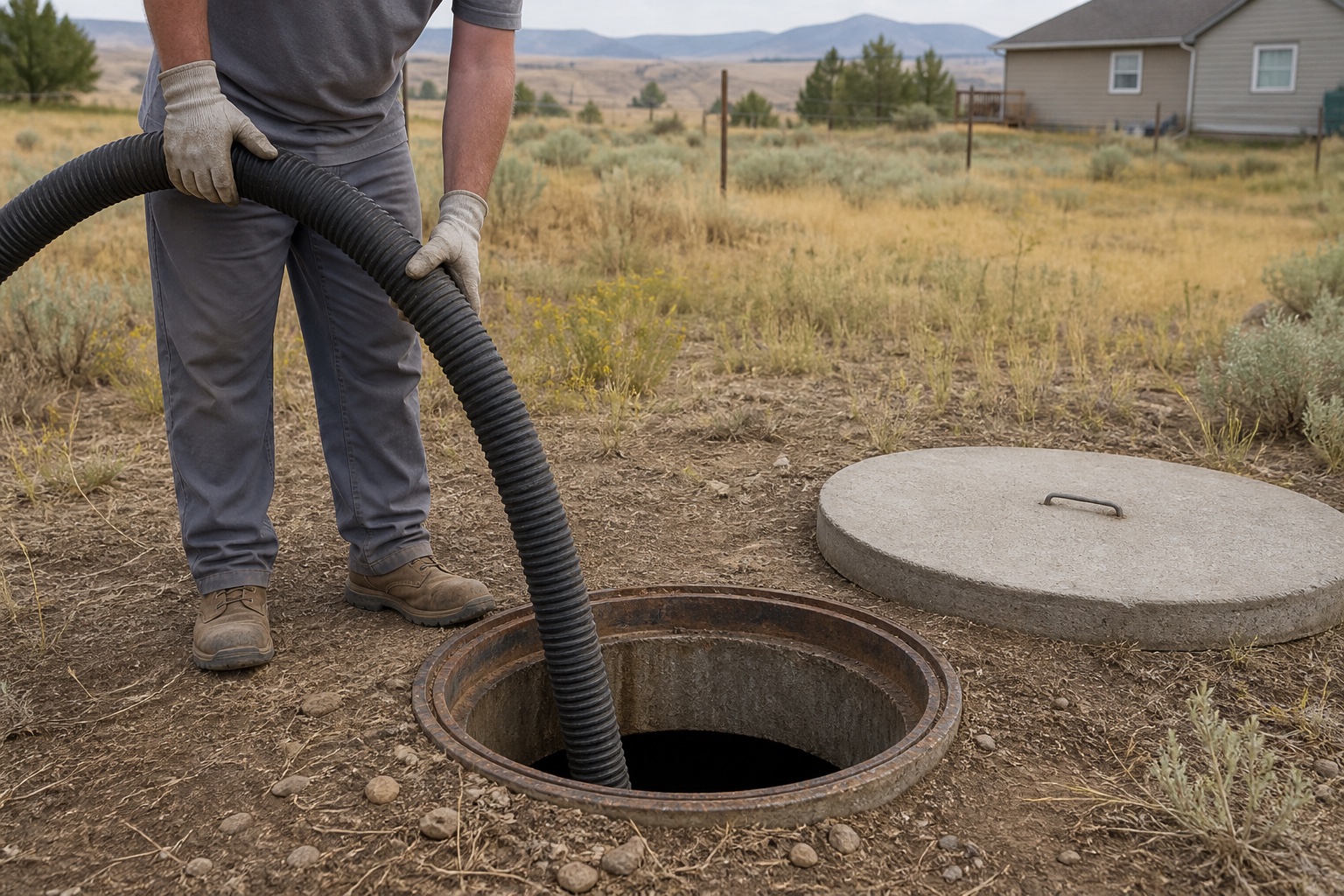
We check the parts we can reach
With the tank open, we look at the inlet and outlet baffles, filter, walls, floor, riser, and cover. A missing outlet tee can send scum toward the field. A cracked cover is a serious fall hazard. Roots, corrosion, or leakage can explain a shorter service interval.
The receipt should list the date, volume removed, scum and sludge depths, baffle condition, and visible wall or floor damage. Keep it with the permit and as-built drawing.
Tell us about access before the truck arrives
We need to know whether the full manhole is visible, how far it sits from firm parking, and whether gates, landscaping, snow, grade, or soft irrigated ground block the hose path. Older concrete lids may be buried even though current standards bring manholes to grade.
A proper riser can reduce future digging, but it needs a watertight connection and a secure cover. Never enter a septic tank. Low oxygen and toxic gases can kill without warning.
Pumping, transport, and disposal are permitted work
Idaho permits discharge to a public sewer or treatment plant and other disposal locations and methods approved by DEQ. The permitted pumper identifies its disposal sites and transports the load under those rules.
The truck-door permit number must be visible, and the pumper can identify the approved receiving site. Call (208) 297-2198 with the address, tank size if known, last service date, lid access, hose distance, and current symptoms.