
Star has municipal treatment, but its plan identifies large outlying areas without municipal water or sewer.
Does the Star address use septic?
Star Sewer & Water District operates the municipal system. The City plan says many outlying areas and much of the planning area still lack municipal water and sewer. Current utility information decides the answer.
A home near planned infrastructure may still use septic today. A home that completed sewer connection and tank abandonment does not need routine pumping.
What we need before dispatch
Find the health-district record for tank size, compartments, field location, pump equipment, and reserve area. Compare the drawing with additions, shops, wells, paving, landscaping, and the current route to the tank.
Tell us whether the main lid is visible, how far it lies from firm parking, and whether irrigation, snow, gates, livestock, branches, road grade, or bridge limits affect a heavy truck. Keep vehicles and stored material off the tank and field before the visit. Send gate codes and clear detailed written directions before the truck starts the route.
- Verify current district service
- Locate the tank and main lid
- Keep the truck off irrigated field soil
- Save service and sewer-connection records
How we decide when to pump
Idaho DEQ describes three to five years as common guidance. Tank size, occupants, seasonal use, garbage-disposal use, and the quality of the last cleaning all change that timing.
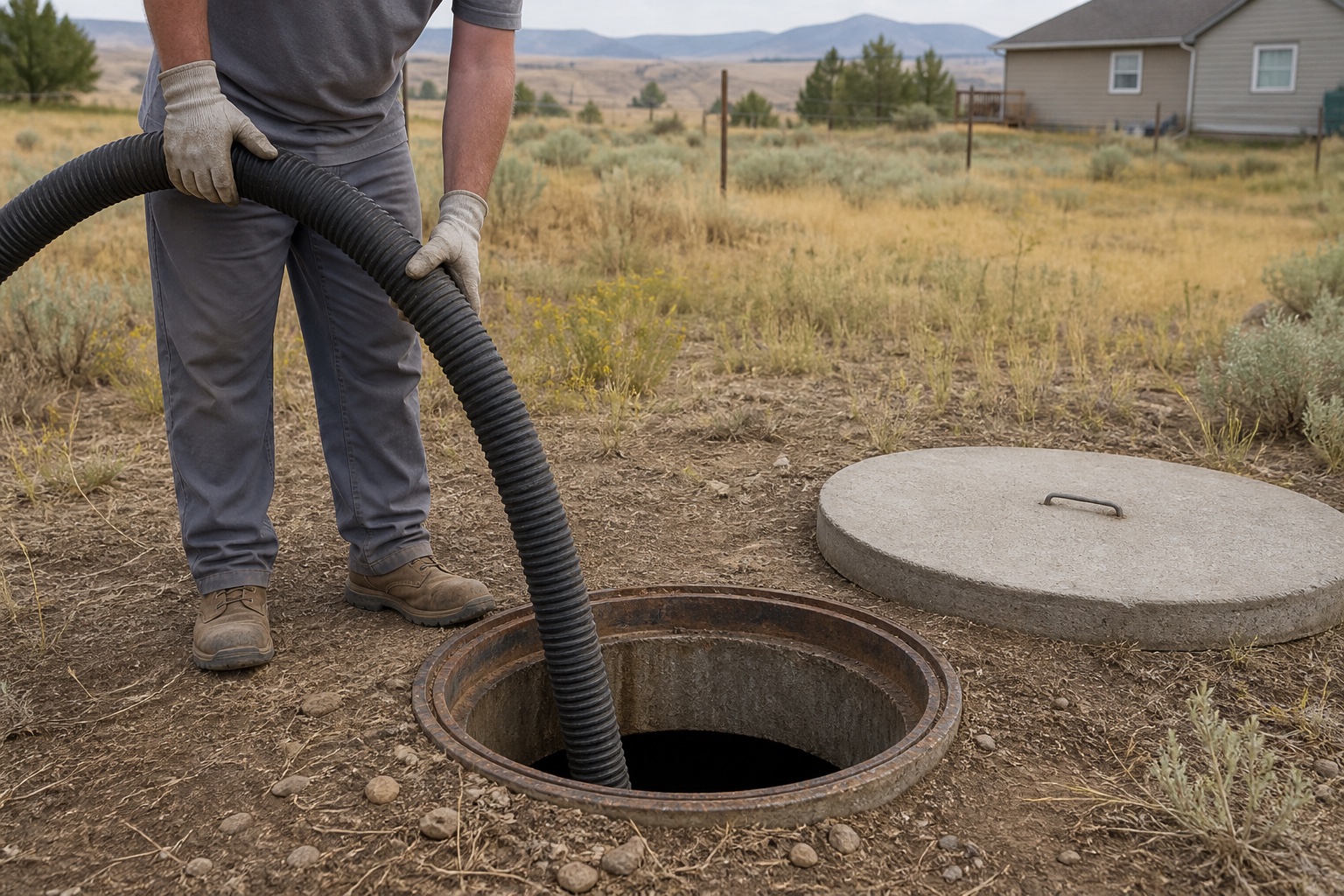
We measure scum and sludge, pump through the main access, remove accumulated waste, and note baffle condition and visible tank damage. Keep the ticket with the permit for the next service call.
Pumping is not the same as repair
A pumper permit covers pumping, transport, and disposal. Installation and drainfield work need the correct Idaho installer registration and a health-district permit. Emptying a tank creates storage but does not repair failed soil.
Call for diagnosis when the whole house backs up, the tank stays high, the field is wet, an alarm sounds, or a lid is unsafe. One slow fixture usually starts with its branch drain.
Local permit and disposal contacts
Central District Health handles onsite permits and records here under IDAPA 58.01.03. Idaho DEQ writes the statewide onsite wastewater rules. Central District Health permits and inspects systems in Ada and Boise counties; Southwest District Health handles Canyon County. A contractor does not issue the permit.
Idaho permits discharge to a public sewer or treatment plant and other disposal locations and methods approved by DEQ. The permitted pumper identifies its disposal sites and transports the load under those rules. Call (208) 297-2198 with the address, sewer status, last pump date, lid access, route condition, and current symptoms.