
Tank installed

Septic System Installation Boise ID

We build the system shown on the issued permit. Soil, groundwater, slope, flow, and replacement space decide the design before installation begins.

Mon–Sat, 7:00 AM – 7:00 PM · Urgent backup calls accepted at any hour

Do not buy a tank before the site review. A new Boise-area system starts with sewer availability, bedrooms and design flow, a complete plot plan, test holes, groundwater work when required, and an approved permit.

Make sure onsite treatment is allowed

Idaho can deny an individual-system application when public or central treatment is reasonably accessible. Check the City or sewer district for the exact parcel before paying for test holes or engineering.

CDH reviews rural Ada and Boise County sites. Rural Middleton-area projects use SWDH. Similar ground across a county line can have a different office, fee schedule, and application.

The site sets tank and field size

Idaho’s minimum tank size for one dwelling is 1,000 gallons, plus 250 gallons for each bedroom above four. That number does not select the field. Soil texture sets the loading rate, and groundwater, rock, impermeable layers, slope, wells, surface water, and cuts set usable locations.

Standard fields need natural slope of 20% or less and room for two complete absorption areas. Fine group C soil needs more area than sandy group A soil for the same house.
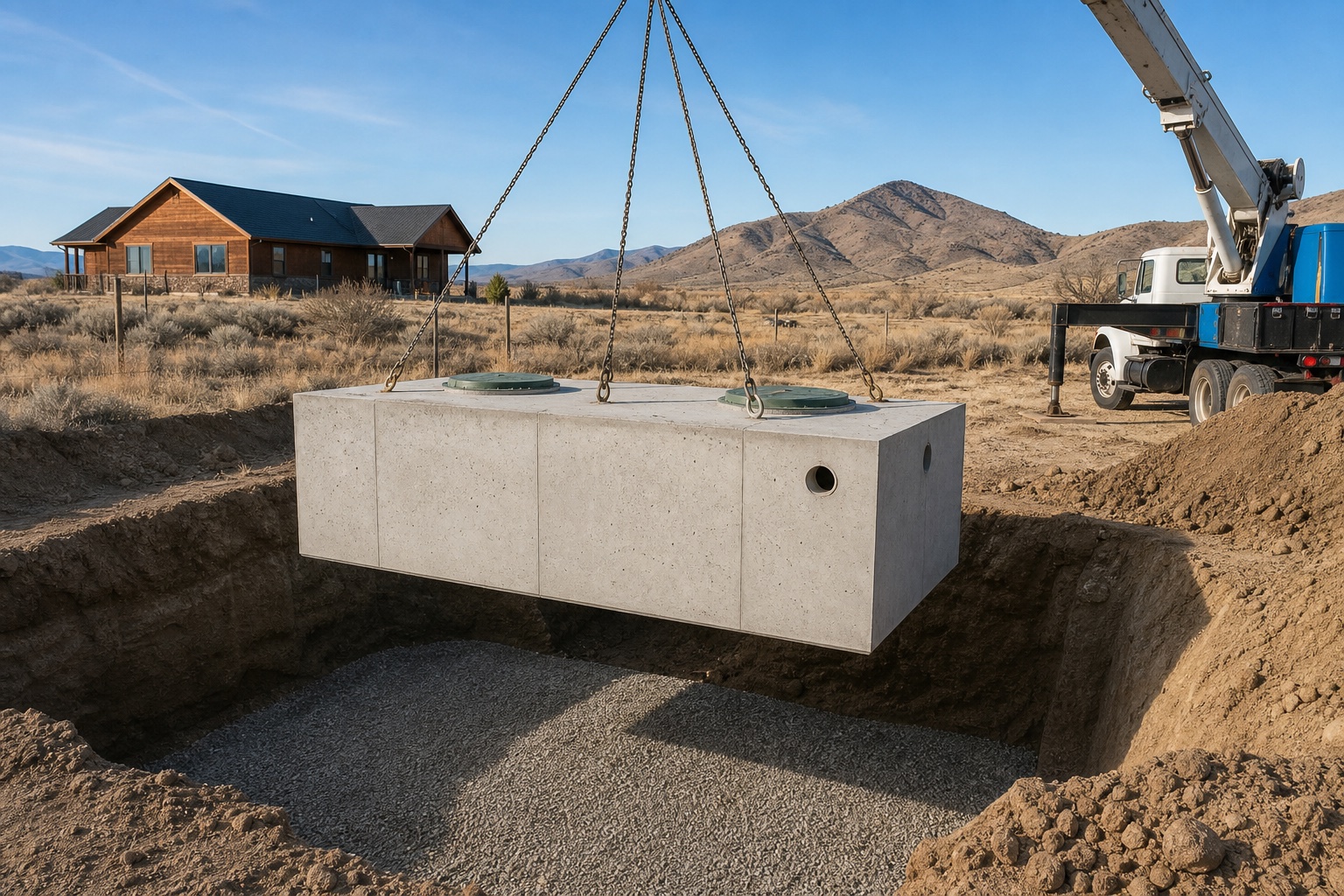
Septic tank installation underway beside a rural building
Tank placement is one part of a permitted system that also includes the field, setbacks, distribution, and replacement area.

Alternative systems need more upkeep

If a standard trench does not fit, CDH may approve a basic or complex alternative under DEQ guidance. Pressure distribution, extended treatment, mounds, and proprietary units add pumps, controls, monitoring, and service requirements.

An extended-treatment package can require annual operation and maintenance by a certified service provider, plus monitoring and reports. Those duties stay with the property, so review them before selecting equipment.

Use the right installer registration

Paid installation in Idaho requires the basic or complex installer registration that matches the permitted system. A pumper permit covers pumping and transport, not construction.

We build from the current permit and approved materials. Any change in tank, field location, component, elevation, or routing must be accepted before backfill hides the work.

Inspection and records finish the job

The permit holder gives CDH the required notice for inspection. A new system cannot receive wastewater until final inspection is complete, and the district prepares the as-built drawing.

Keep that drawing with manuals and service records. Do not place a driveway, building, pool, or compacted storage area over either field. Call (208) 297-2198 with the parcel, bedroom count, sewer check, test-hole status, and CDH correspondence.

What we can settle on the first call

Give us the address, permit drawing, last service ticket, lid location, truck access, and symptoms. We can use that information to choose the right first visit and quote the known work. A phone call cannot show us the inside of the tank, the soil below the field, the seasonal groundwater level, or a hidden broken line. The independent contractor confirms availability, credentials, price, and written terms for the actual job.

If the visit turns into excavation, tank replacement, drainfield work, design, or a permit, we separate that work from the original pump-out or inspection. The responsible health district must be involved where Idaho rules require it.

Before the appointment, keep cars, trailers, snow, and stored materials away from the tank and field. Do not open the lid yourself. Mark sprinklers, pet fences, and other buried lines that cross the hose path. If the drawing shows more than one tank or compartment, point that out when you call so the quote and truck setup cover the complete system.

Save the complete detailed service ticket after the visit. It gives the next contractor a starting point for tank size, removed volume, layer depth, access, and any part that needs another look.

Septic System Installation questions

What is Idaho’s minimum residential tank size?

1,000 gallons for one dwelling, plus 250 gallons for each bedroom above four. The permit may require more capacity or other components.

Can I pick a gravity field before test holes?

No. Soil, slope, groundwater, limiting layers, and usable area must be reviewed first.

Can an owner install their own system?

DEQ describes a narrow owner exception for a standard or basic system on the owner’s property with no hired help. The permit and inspection still apply.

What is basic versus complex installer registration?

Basic registration has system limits. Complex registration covers the broader alternative set. Match the installer to the permit.

Why reserve a second field?

Idaho requires two full-size absorption areas so suitable ground remains available when the first field must be replaced.

Planning a new septic system?

Call after checking sewer service, and have the parcel number, bedroom count, plot plan, and CDH status ready.

Call (208) 297-2198 Septic pumping · Boise and nearby communities