
Call if the whole house drains slowly, sewage is surfacing, the tank stays high, or one strip of the field is wet in dry weather. We follow the flow from the building to the tank and field so a broken pipe, clogged filter, bad pump, or distribution problem does not get sold as a full replacement.
We check the tank level before pumping
A high operating level points toward the outlet, pump, distribution, groundwater, or field. A normal tank with a building backup points toward the inlet or building sewer. A low level can mean the tank leaks. We record the level and check flow before a pump-out removes those clues.
Pumping can give a backed-up home temporary storage. It will not make saturated or exhausted soil accept water again. If the tank rises quickly under normal use, we keep looking for the downstream cause.
Boise-area soil is not all the same
Treasure Valley sites can contain sand, gravel, silt, and fine layers. Foothill lots add slope, cuts, shallow material, and fractured rock. The test-hole profile and permitted loading rate matter more than a neighborhood description.
A standard field is limited to natural slopes of 20% or less. Idaho also requires room for two complete fields. Keep the reserve area free of buildings, paving, parking, and vehicle traffic so it remains usable for a future repair.
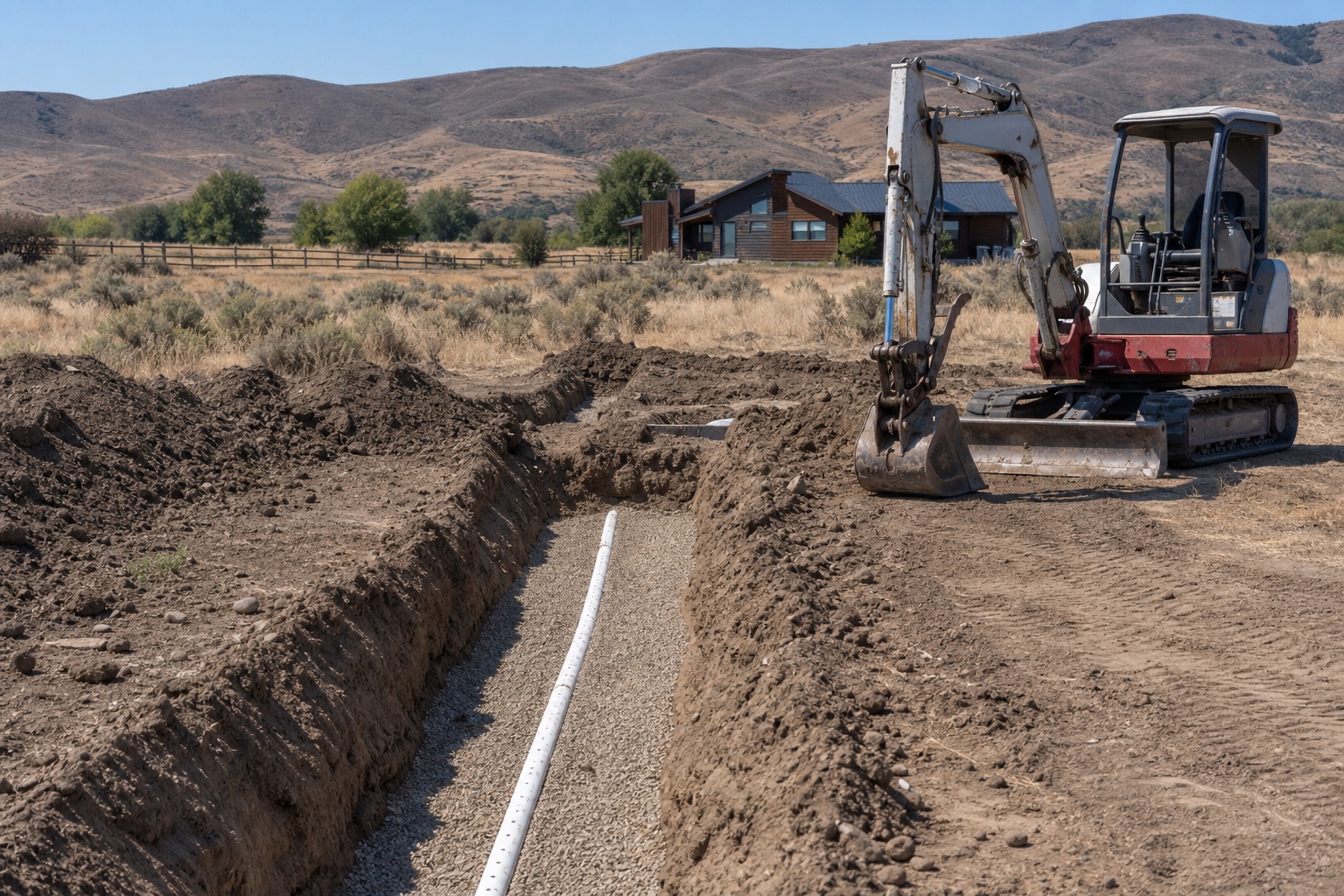
Smaller repairs can restore distribution
We check solid piping, the distribution box, effluent filter, dosing pump, floats, and roots before recommending a new field. A broken line can flood one trench while the rest of the field stays underused. A failed pump can leave good soil dry.
Clogged or broken solid pipe and some electrical or mechanical repairs may qualify for Idaho’s limited permit exceptions when the system is not expanded. Field replacement, tank replacement, and design changes need health-district review.
When pumping helps and when it does not
Pump when sewage is backing up and storage is needed, solids threaten the outlet, or the tank must be opened for inspection. Stop unnecessary water use and keep people and pets away from surfaced wastewater.
Do not keep ordering pump-outs for a field that ponds again after ordinary use. Do not drive equipment across wet treatment soil. Idaho prohibits trench excavation when moisture would smear and compact the absorption surface.
Failed fields need the health district
Idaho treats a system as failing when it stops accepting flow or wastewater reaches the ground surface or water. The owner must obtain the required permit and repair it as soon as practical or as directed.
Call CDH at 208-327-7499 for Ada or Boise County work. Rural Middleton-area work goes through SWDH. Call us at (208) 297-2198 with the address, last pump date, wet-area location, irrigation history, and which fixtures are affected.